Fallow Reach
Loading0%
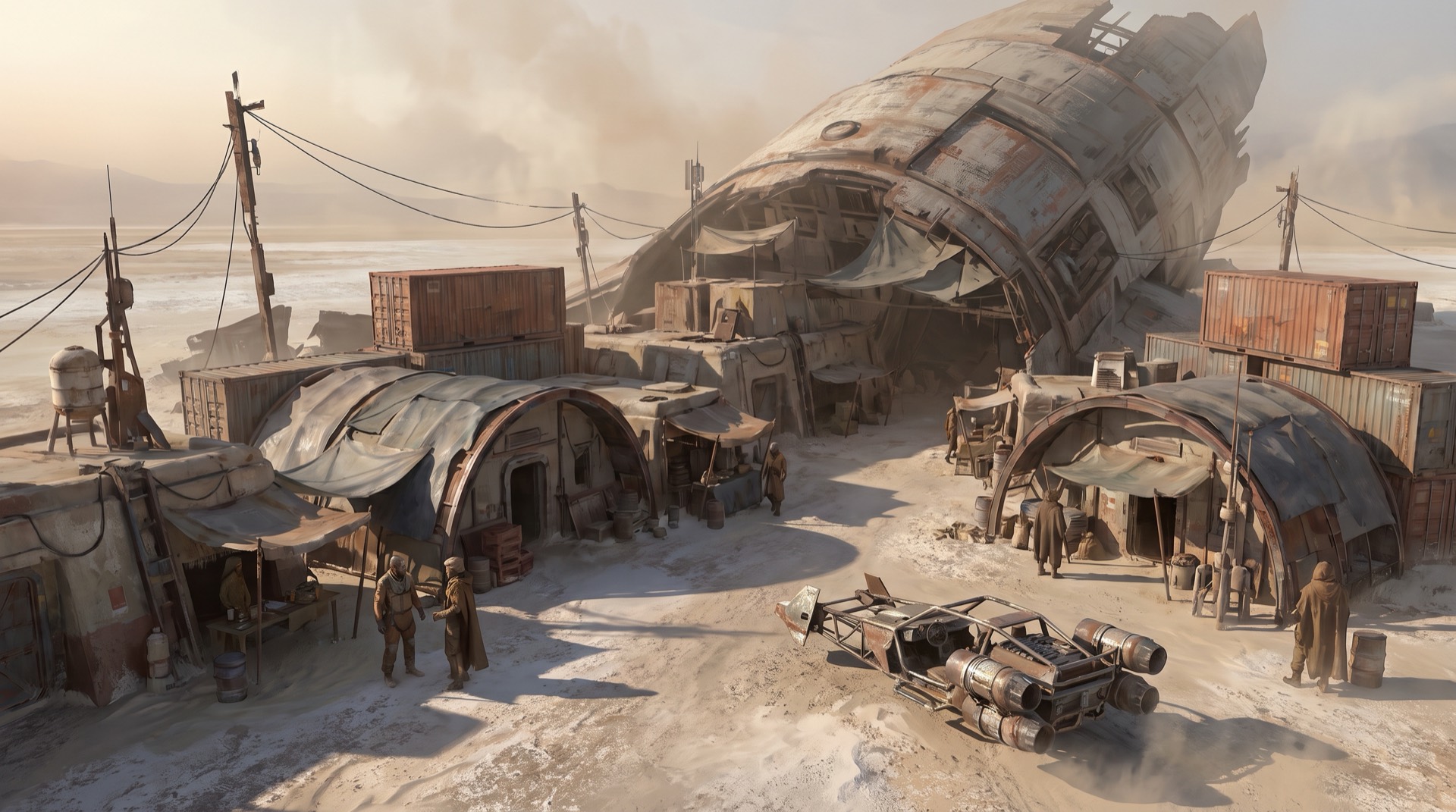
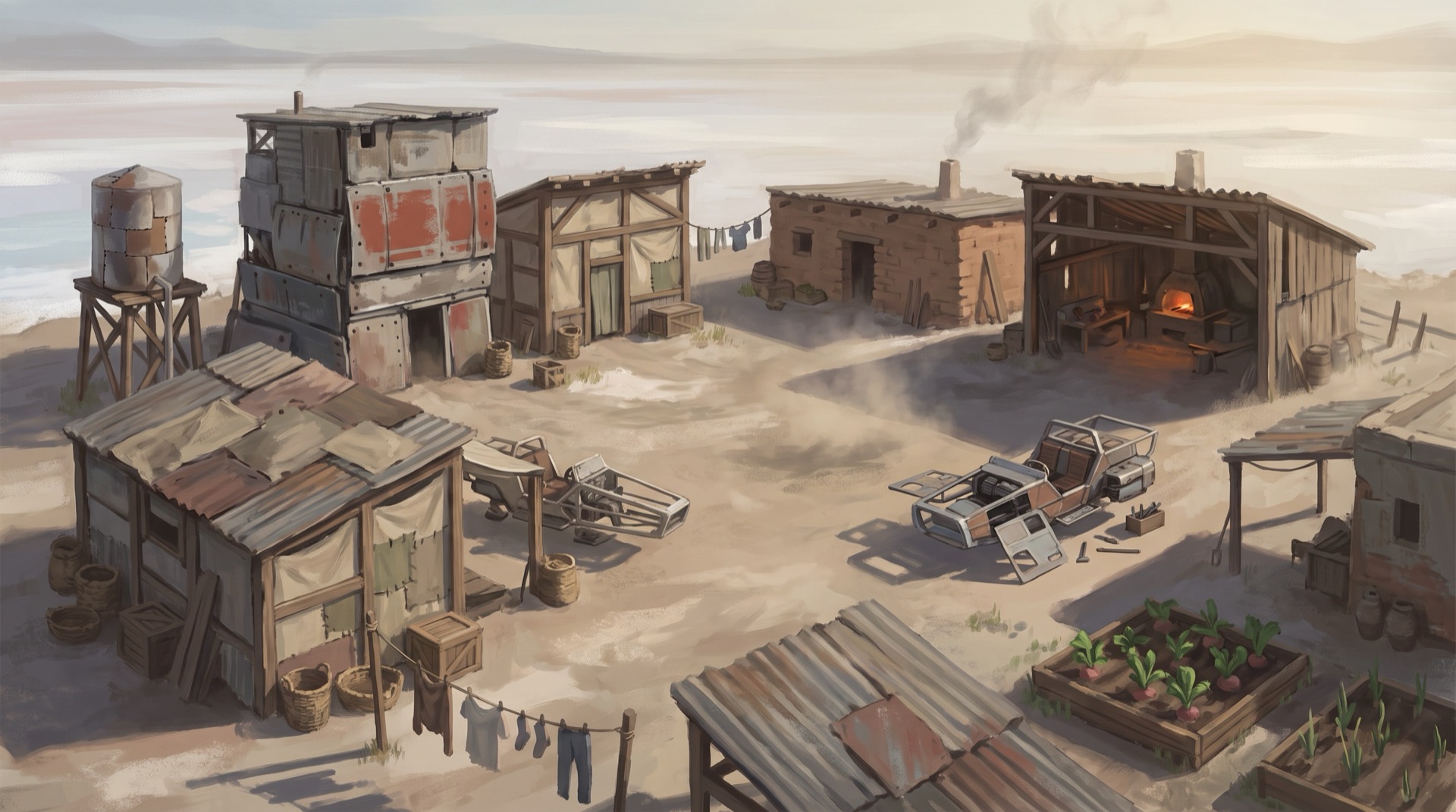
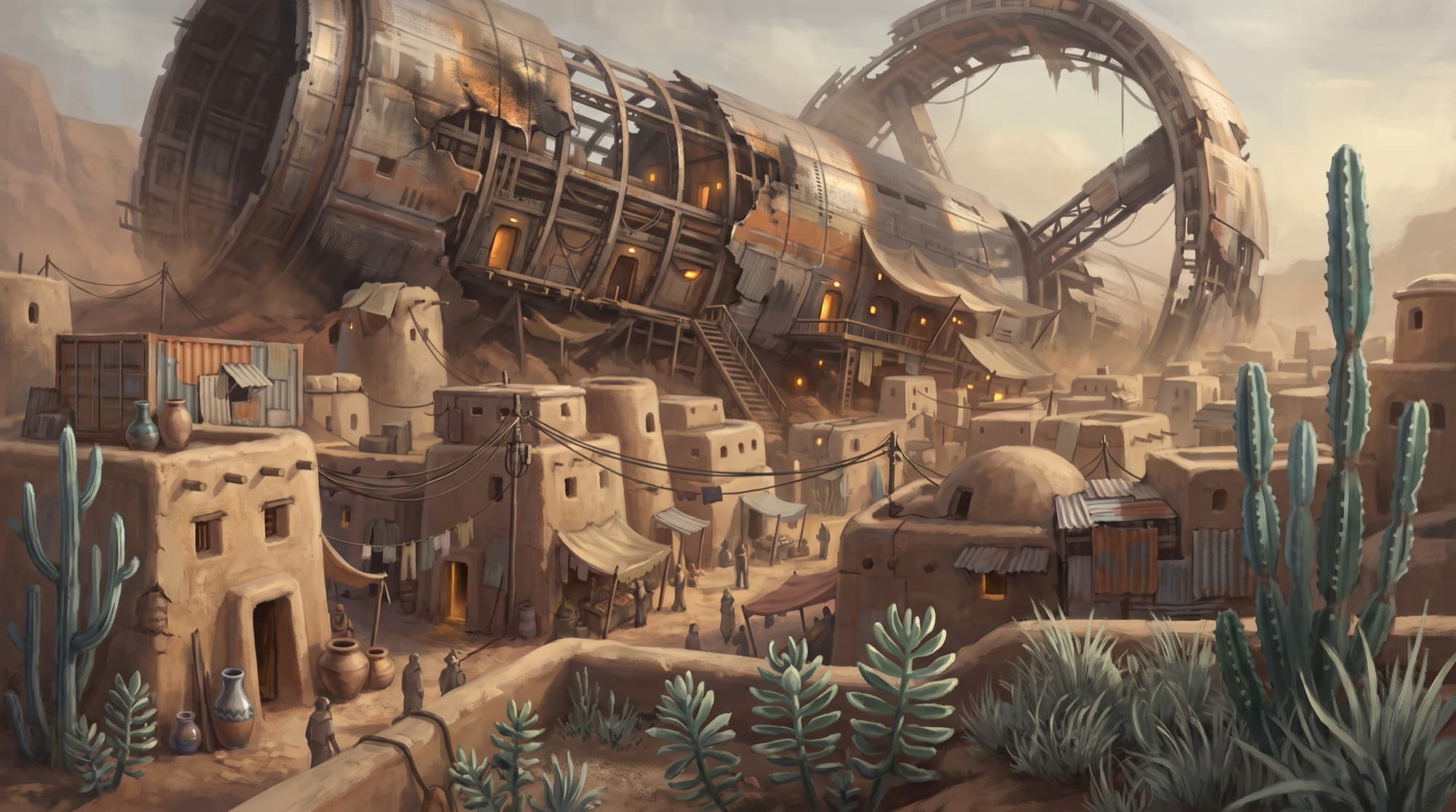
Landfall — a settlement built into a crashed hull section, with the broken Arch on the horizon

A slow sandbox MMORPG · One server, one world

Everything here fell out of the sky.

Forty-one years ago the gate above this planet came apart, and the wreckage has been coming down ever since. There is no resupply. Everything anyone owns, another player cut out of a wreck and made by hand.

Scroll
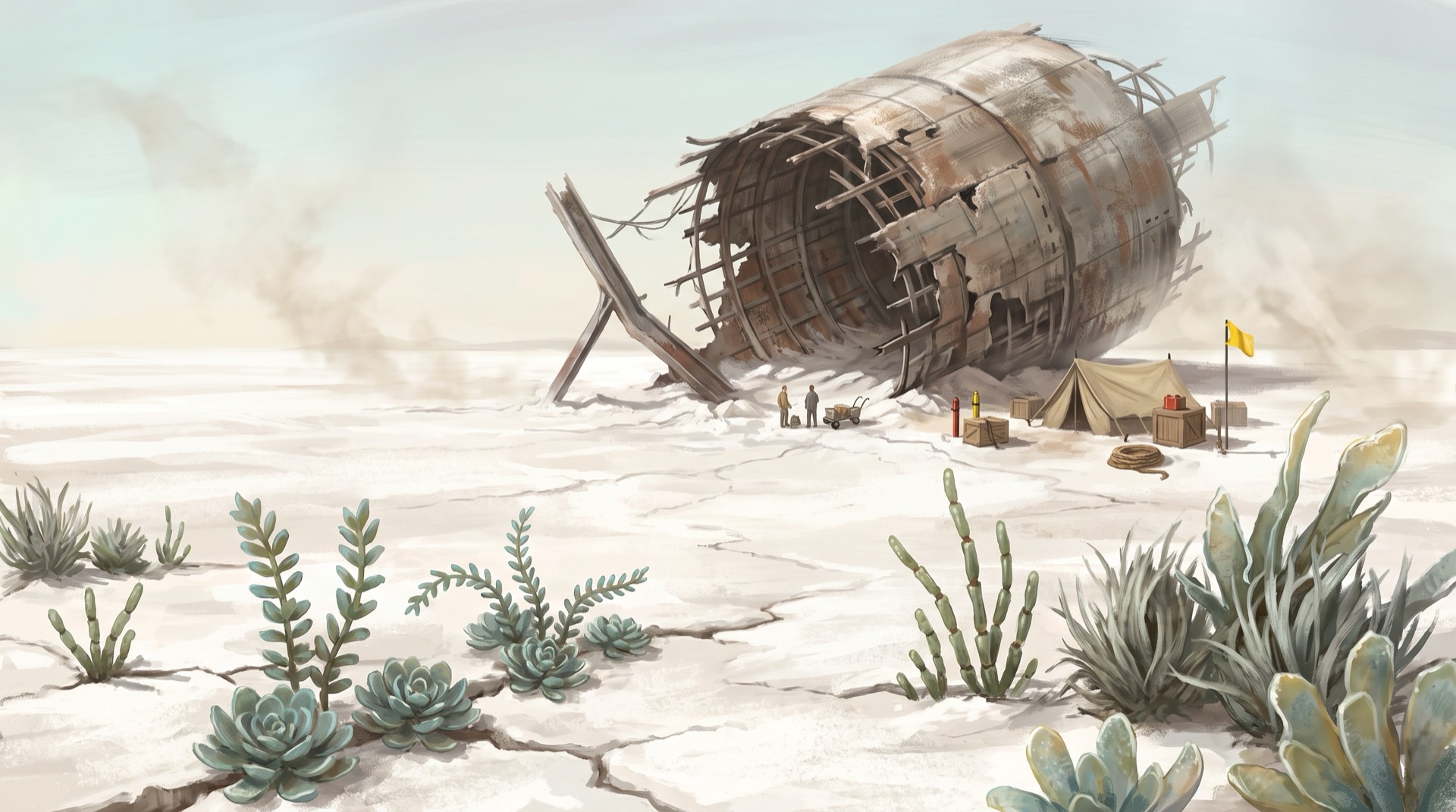
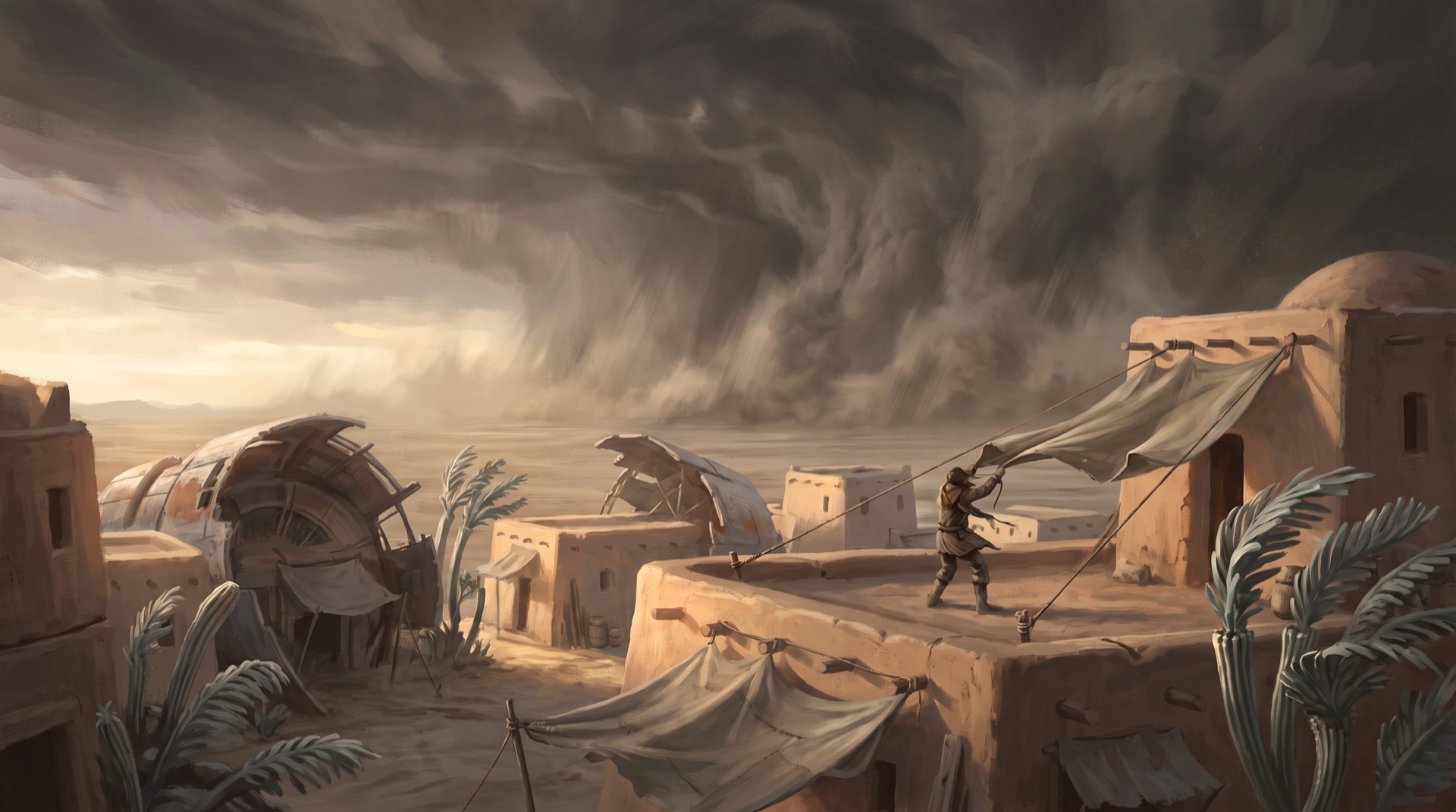
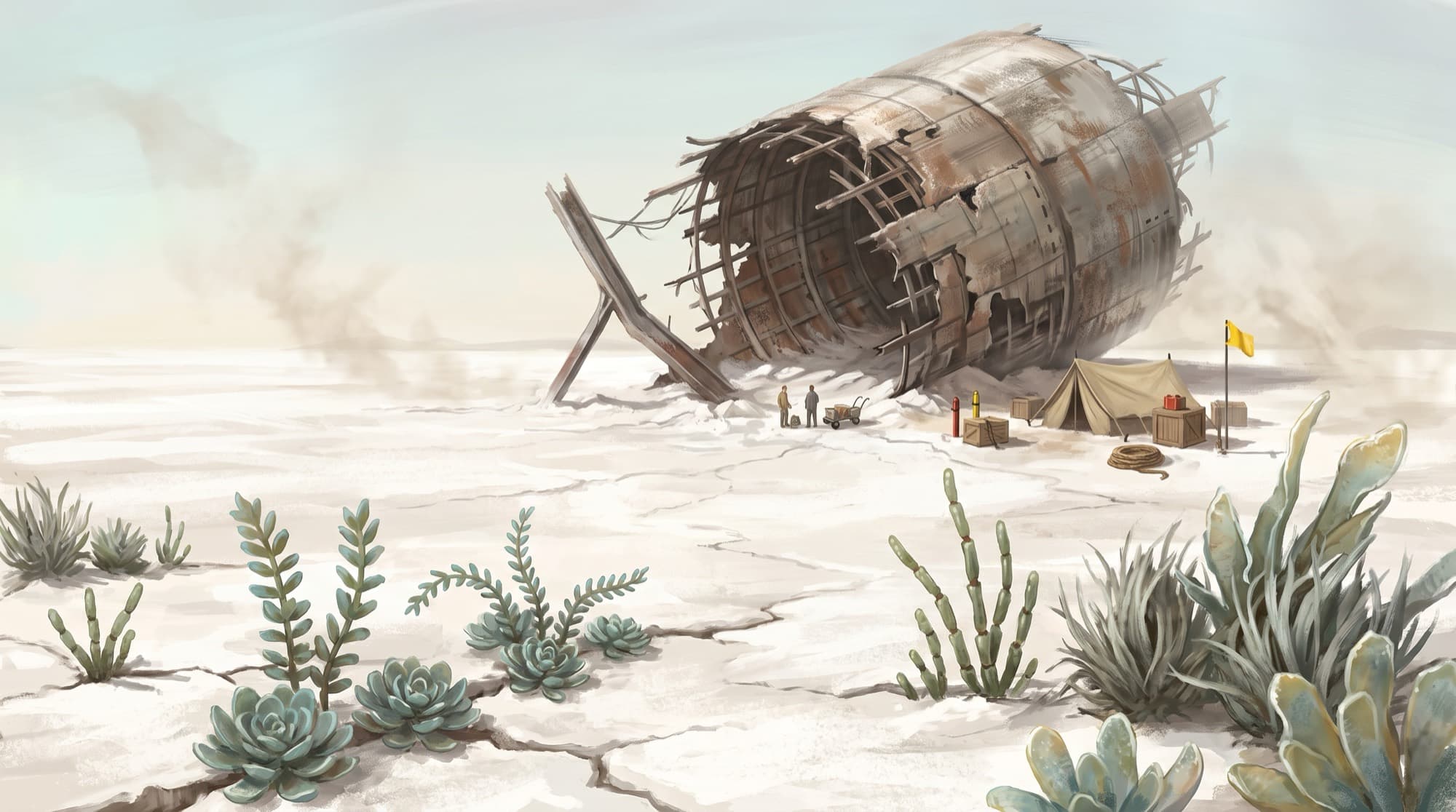
The Pans — bleached salt flats under a high sky

Ninety years ago

There was a way in and a way out.

Fallow was a frontier world at the end of a jump gate. Ships came through the Arch with medicine, spare parts and people. Two hundred thousand of them lived here. Nothing on this planet had to be made on this planet.
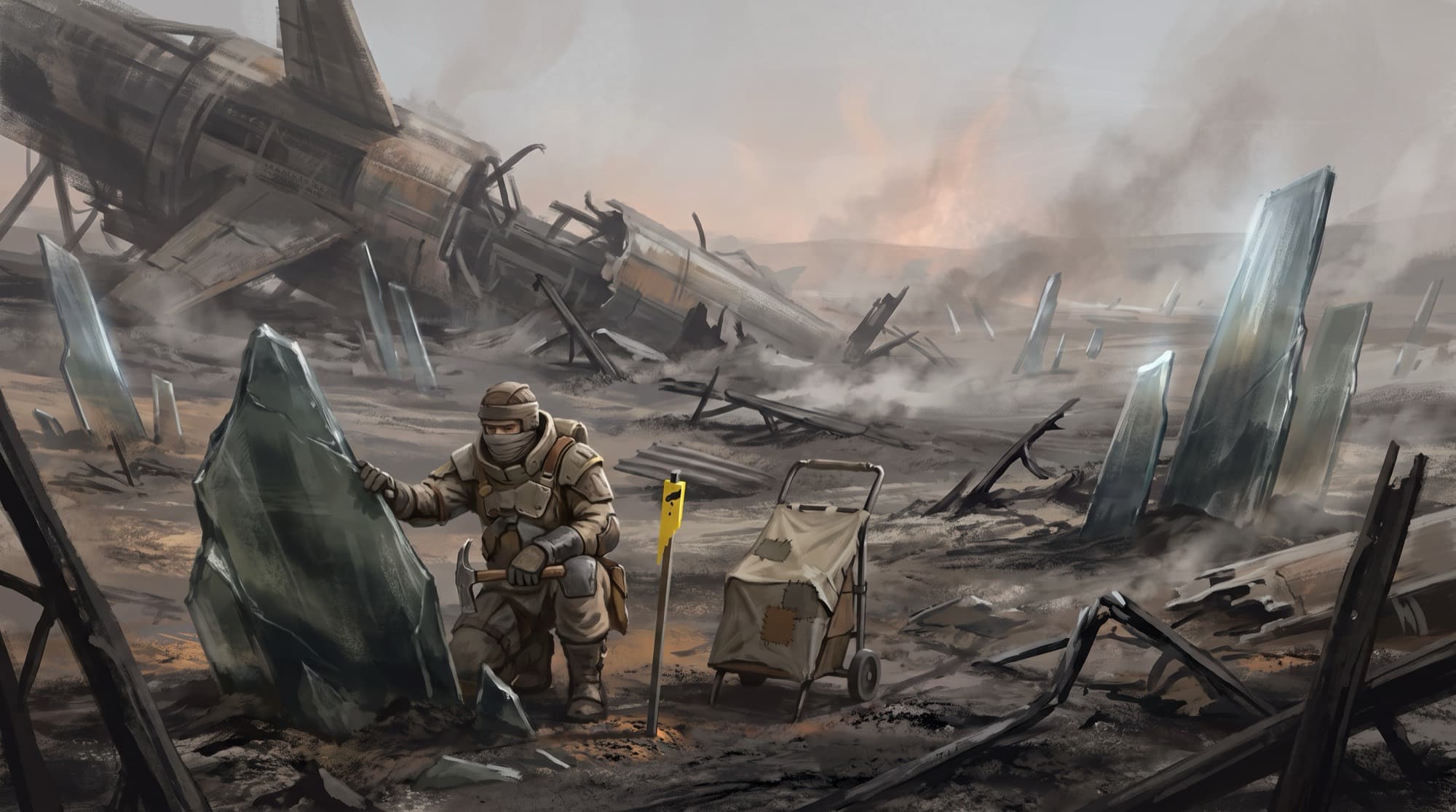
Emberfield — where the largest fragment of the Arch struck

Forty-one years ago

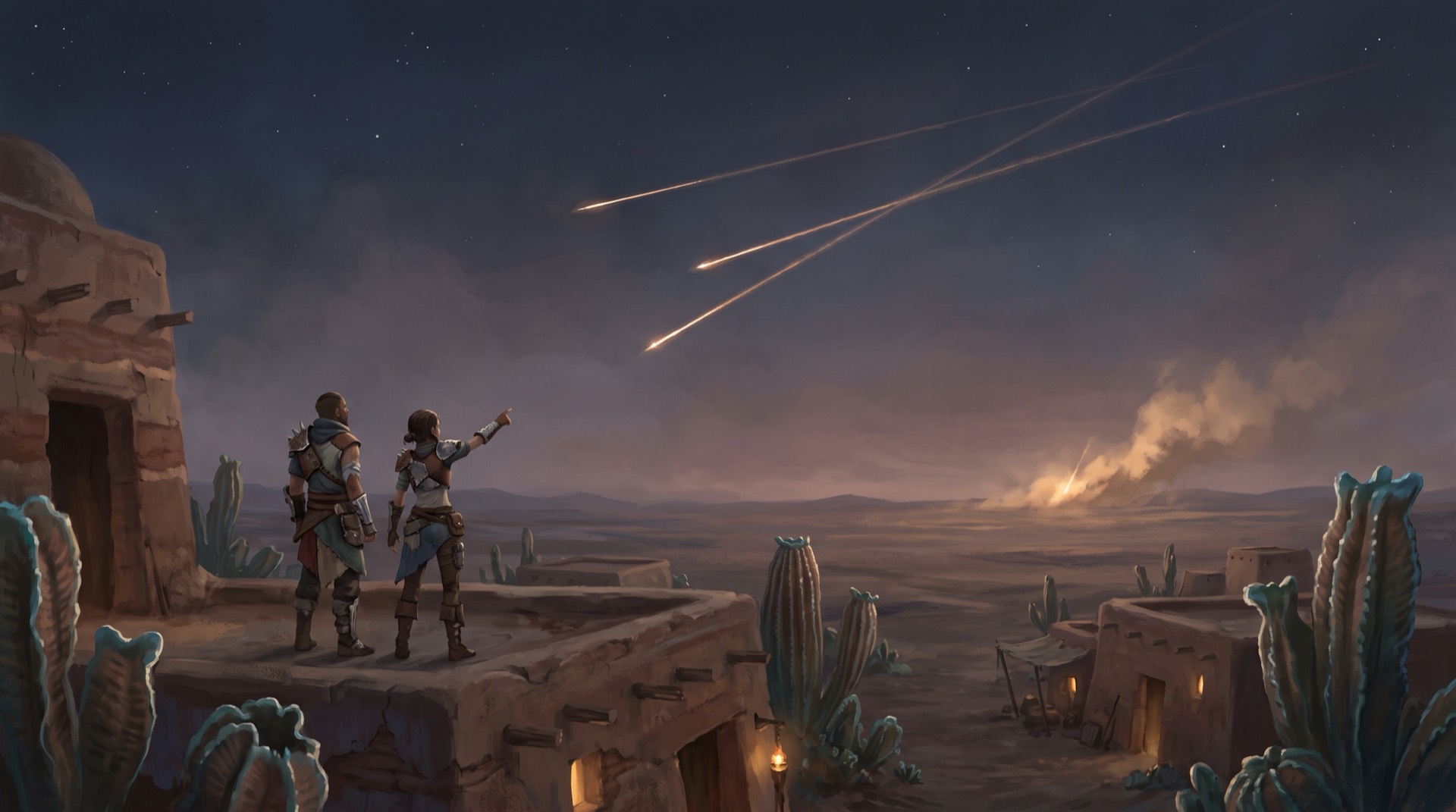
The Arch came down.

Not slowly, and nobody knows why. The gate broke apart and took everything docked to it. For months the sky burned and the wreckage landed. When it stopped, there was no way off the planet and no way to ask for help.

Landfall — a town built into a crashed hull section

Today

Fifteen thousand people, and it is still falling.

The belt is unstable. Every few weeks another wave comes down somewhere new. That wreckage is the only source of metal, parts and machinery left — so people go out and cut it apart, and everything anyone owns was built from it by hand.

One map

Five by five kilometres, and no loading screens in it.

Compact on purpose. A small population spread over a huge map meets nobody, so the world is dense instead of vast — five areas that look and feel nothing alike, with the buildable land in between. The edges are ground the Fall killed, which means the fence is part of the story.

The hub

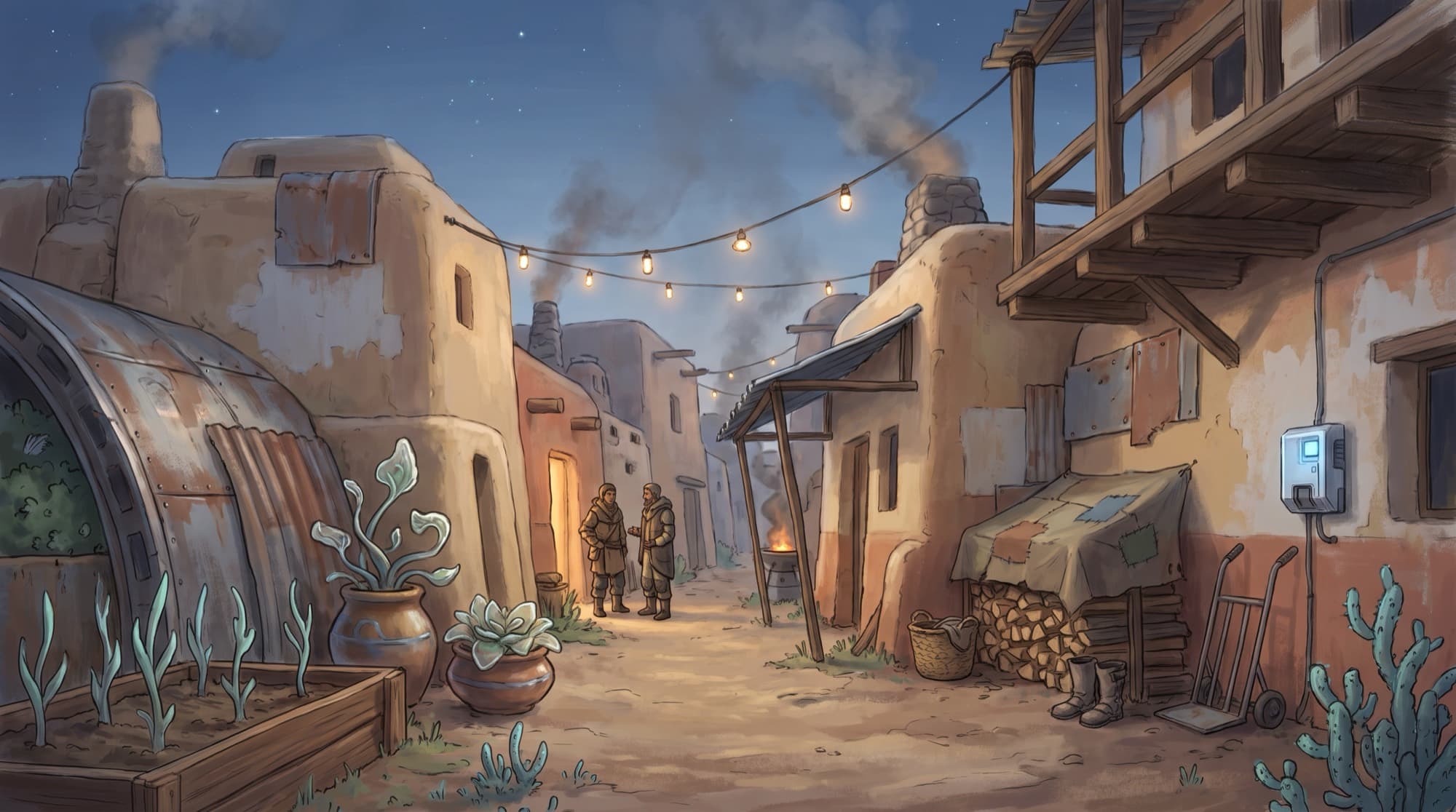
Landfall

Built into the hull section that came down on top of the old spaceport. Market, Registry office, and where everyone starts.

Open salt flats

The Pans

Bleached, wide and empty enough to see a debris field from a long way off. Speeder country. Where you learn to salvage.

Wetland and thicket

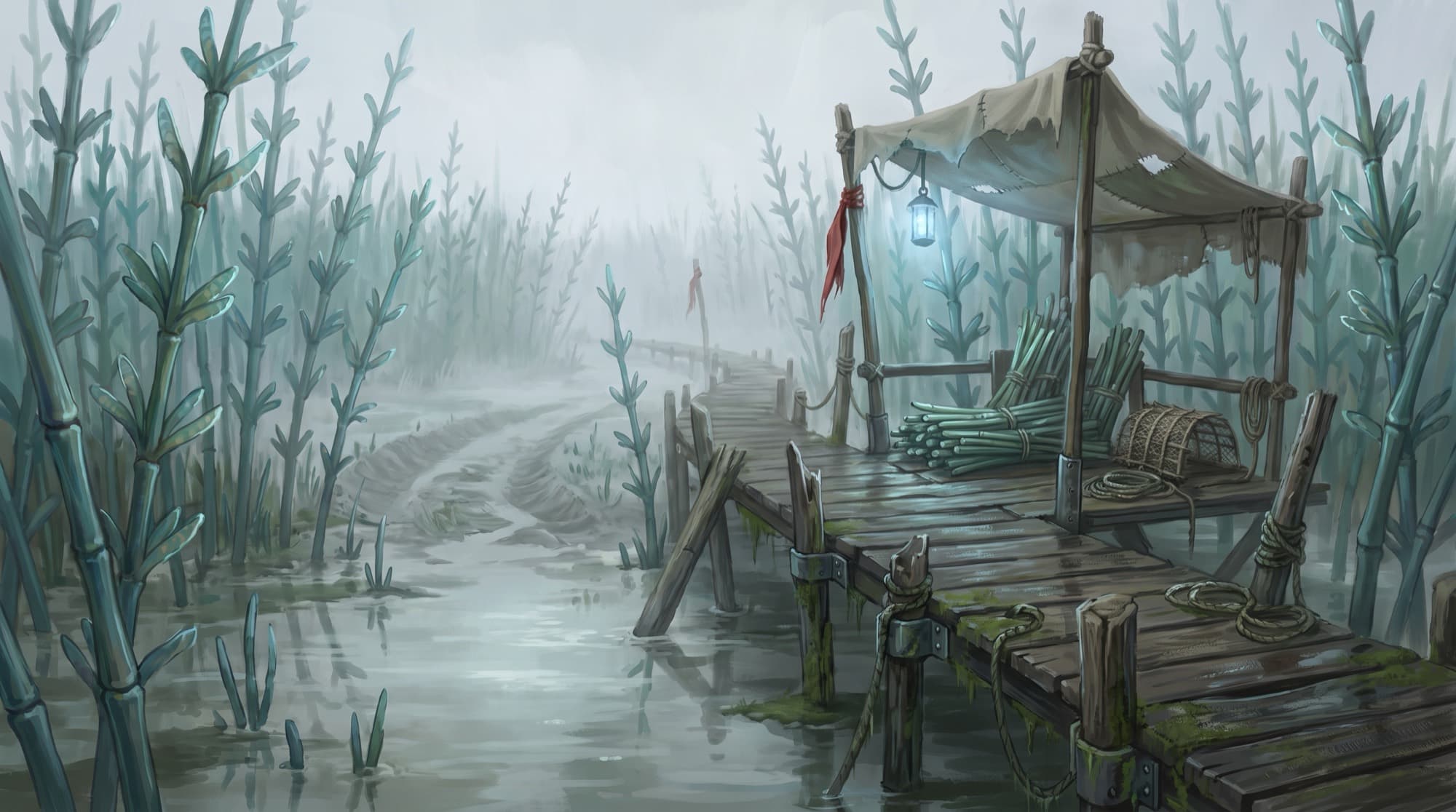
Thornwash

Damp, green and hard to see through. Organic material grows here, and so does everything that eats it.

Mountains and old mines

The Spine

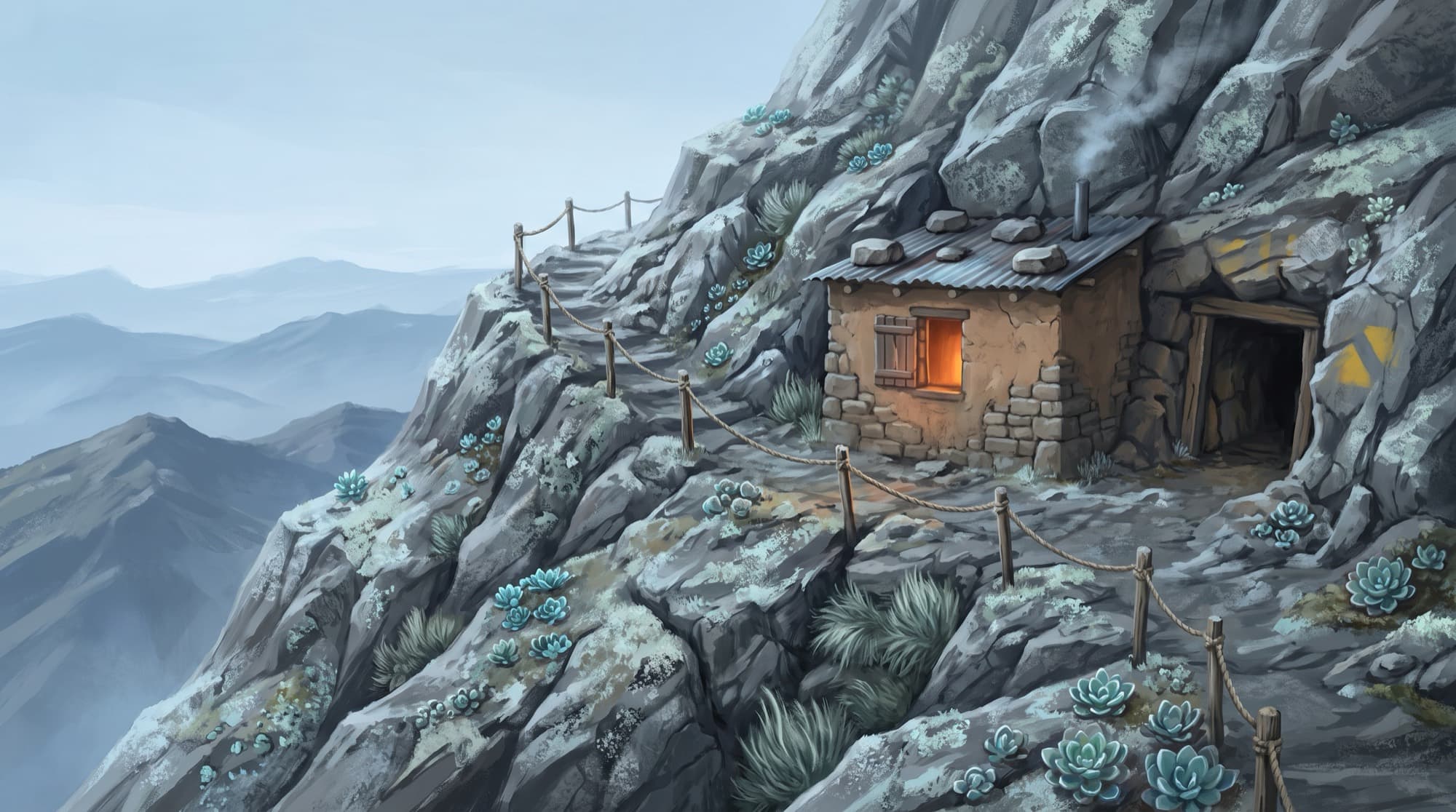
Cold stone and hard shadows. Ore in the rock and colonial mine workings nobody has opened in forty years.

Impact ground

Emberfield

Where the biggest piece of the Arch hit. Hot, unstable, and full of the best material on the planet. It will also kill you.

What you do

Take it apart. Make it into something. Sell it to somebody.

There is no quest hub handing out errands. The economy is the content: material comes out of the ground and out of wrecks, players turn it into everything else, and it wears out so the work never runs dry.

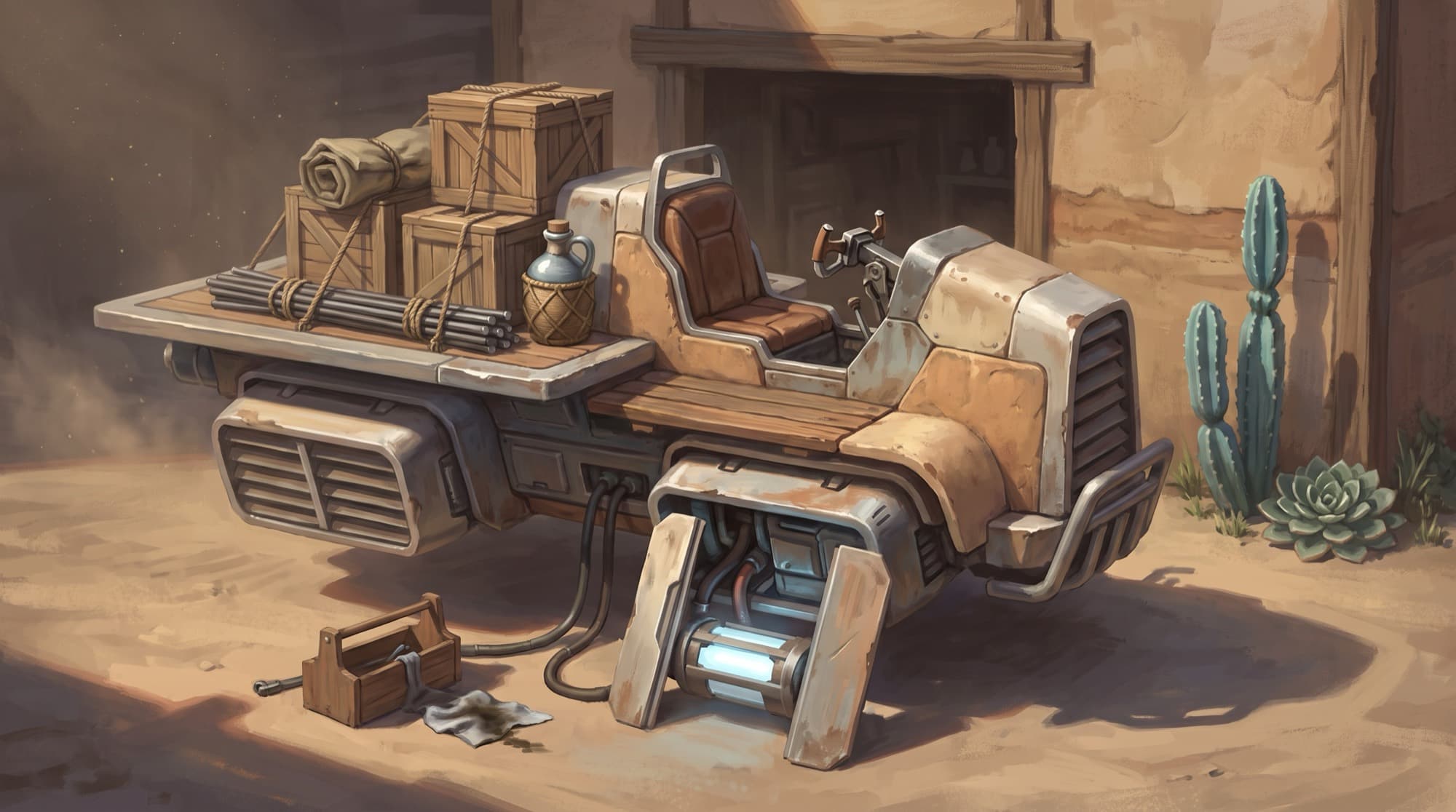
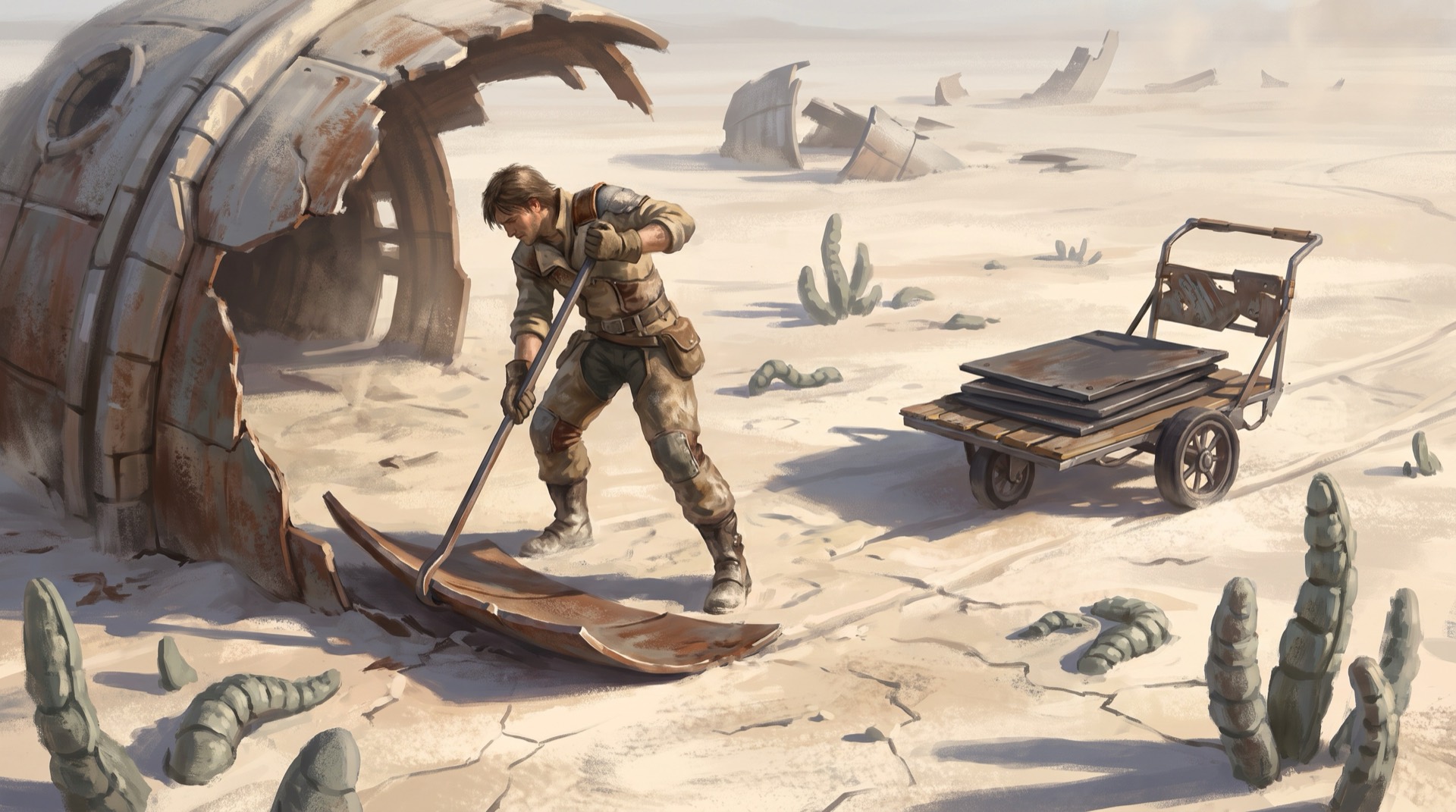
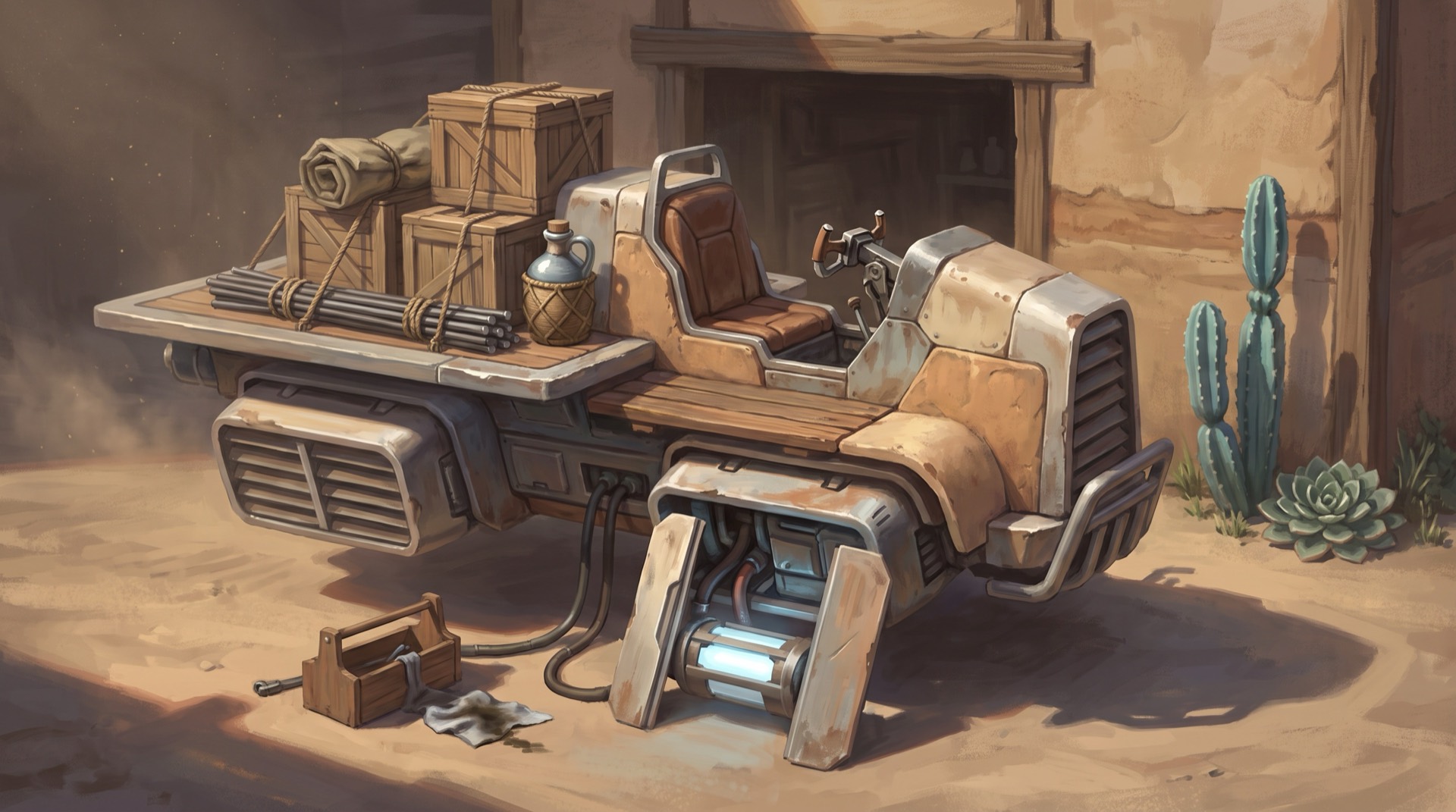
A patched speeder on the salt flats

Cut wrecks apart

Find a debris field, work out what is worth taking, and get it out without setting off whatever is still live inside. What you recover carries the ship it fell from.

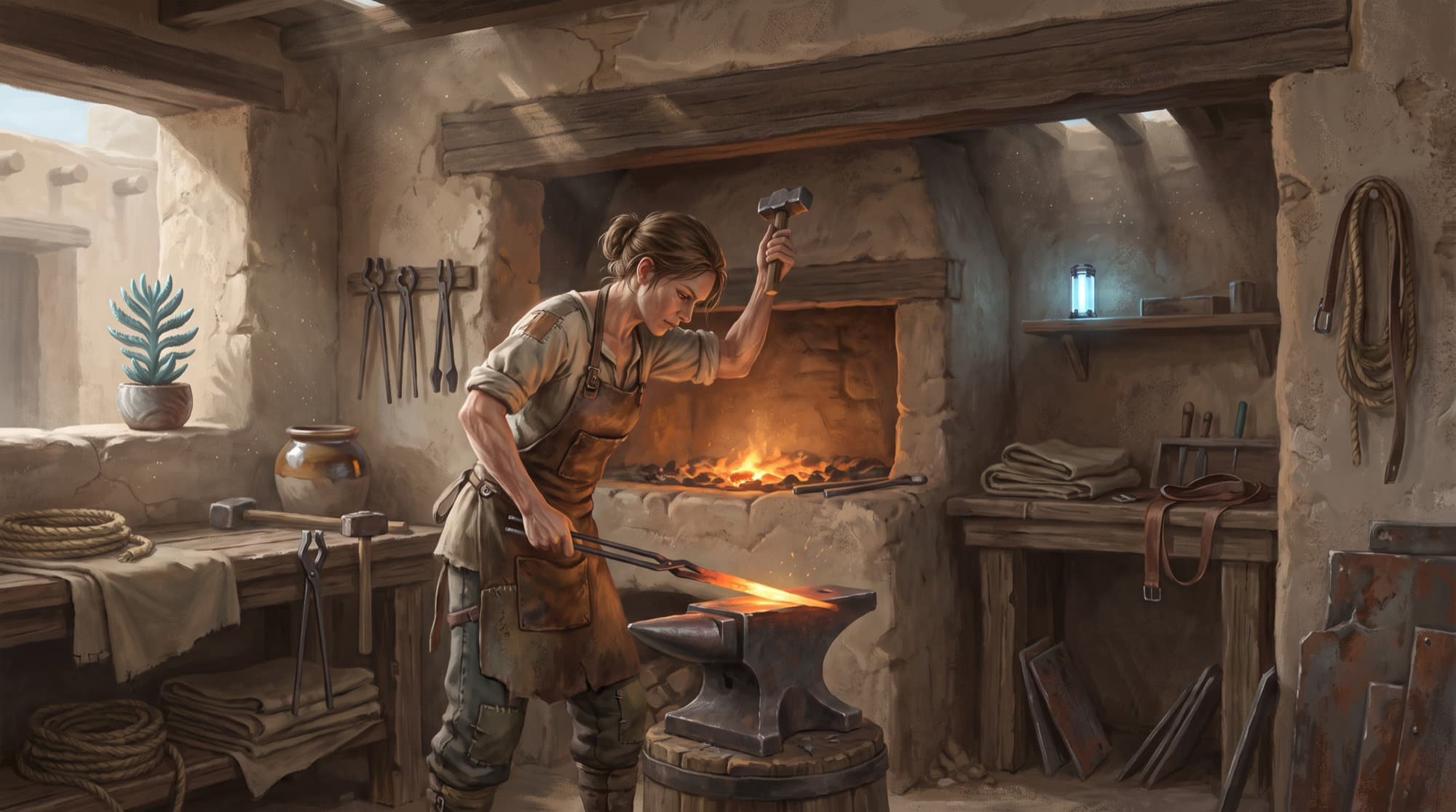
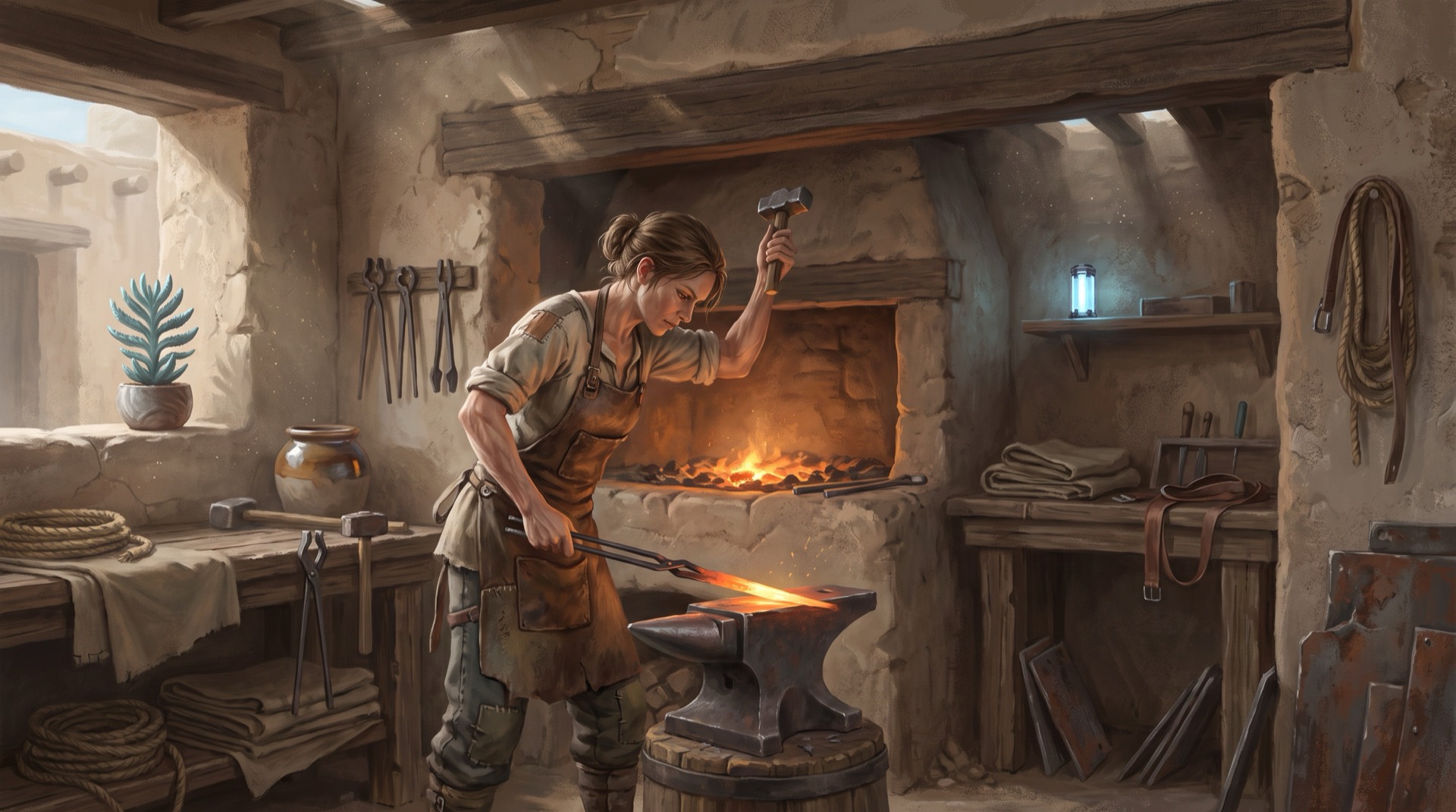
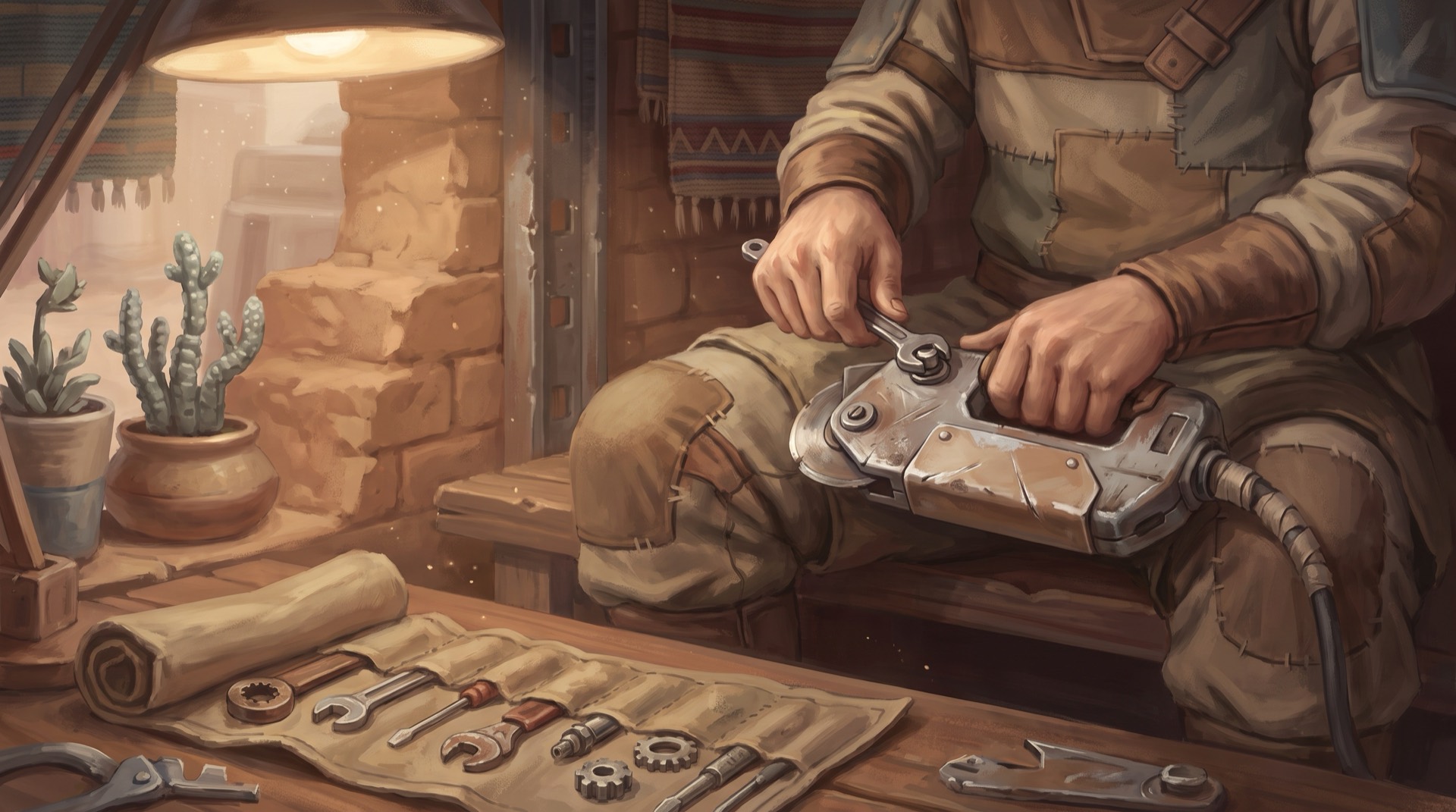
A smith at a workbench

Make things people need

Every tool, weapon, suit, vehicle and building in the world is made by a player from salvaged material. Your name goes on it and stays on it.

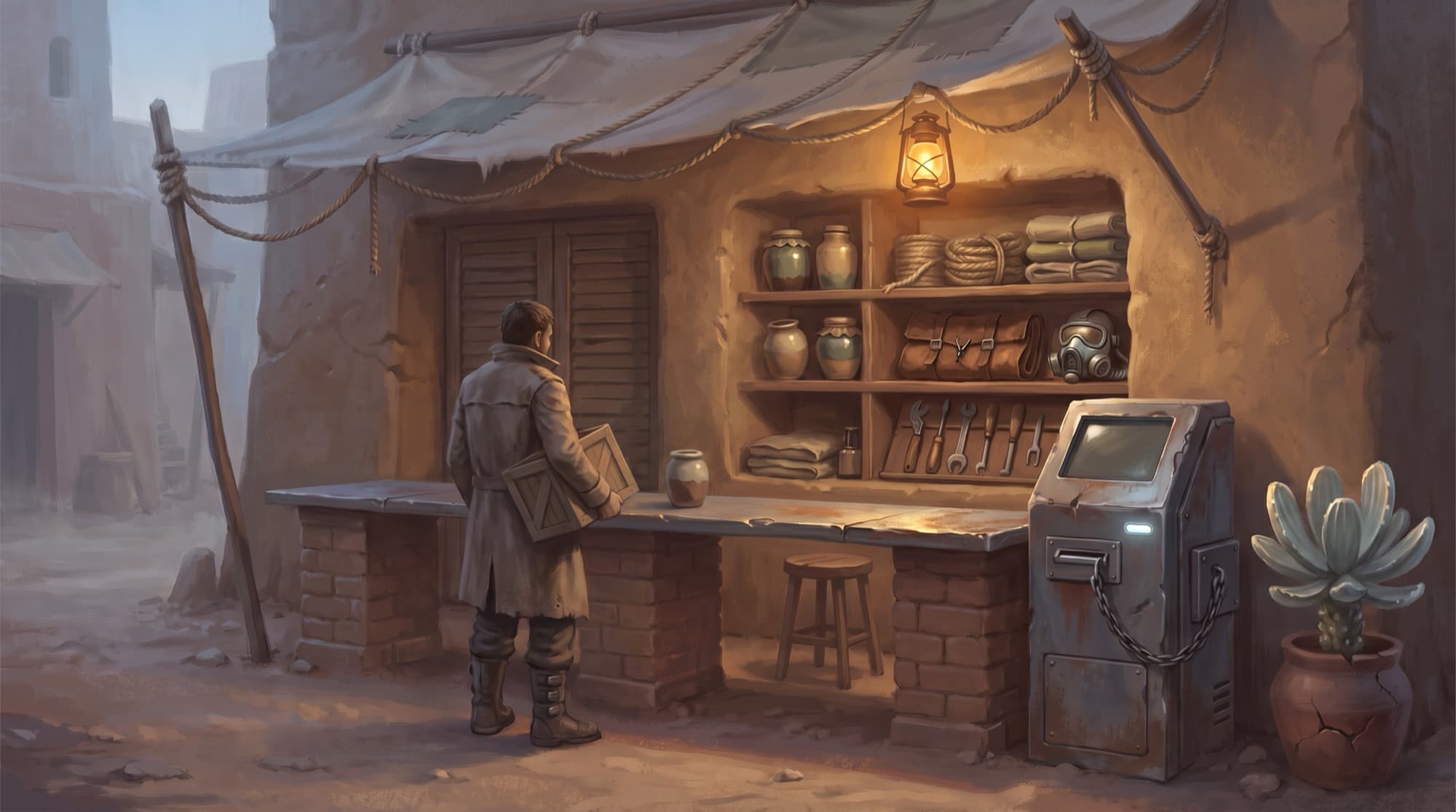
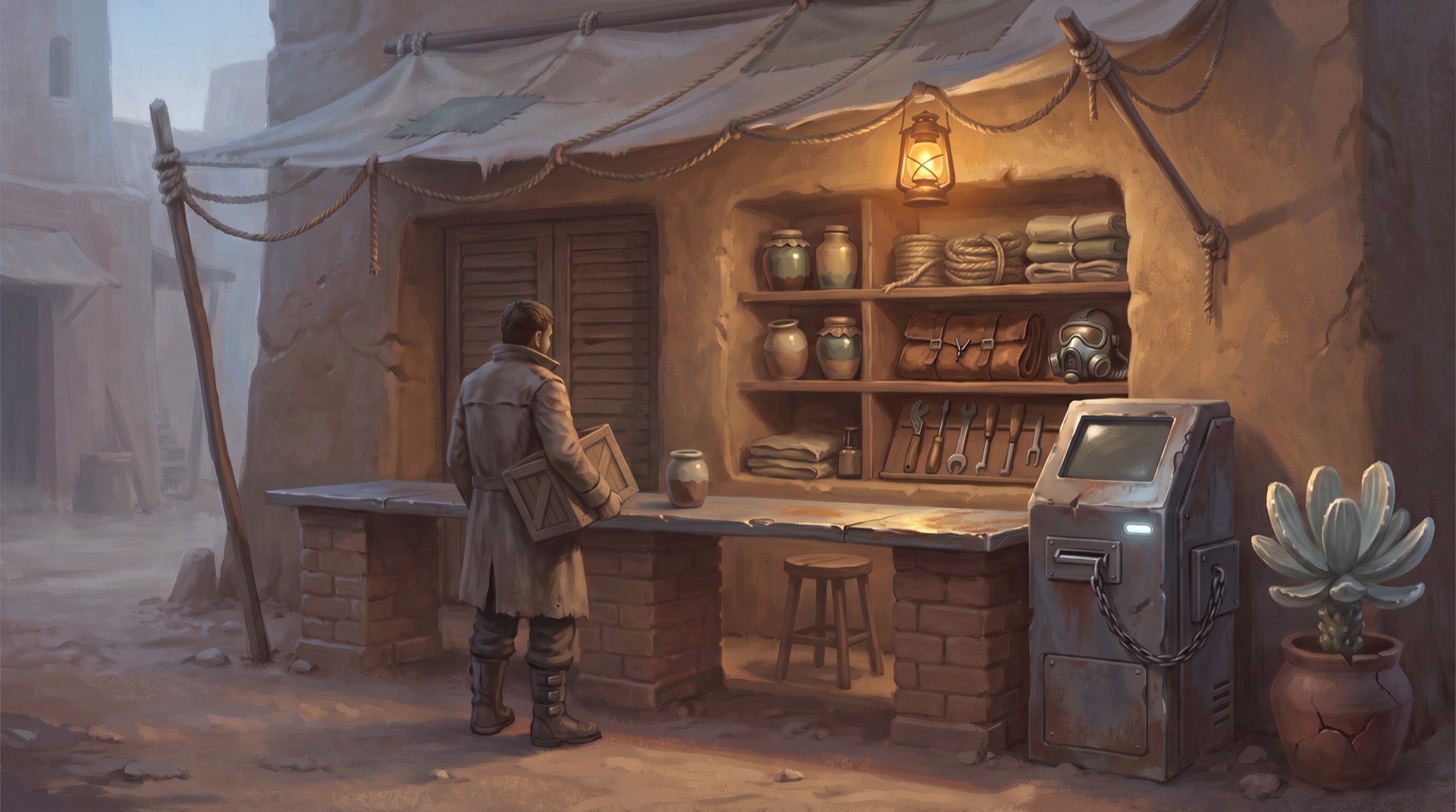
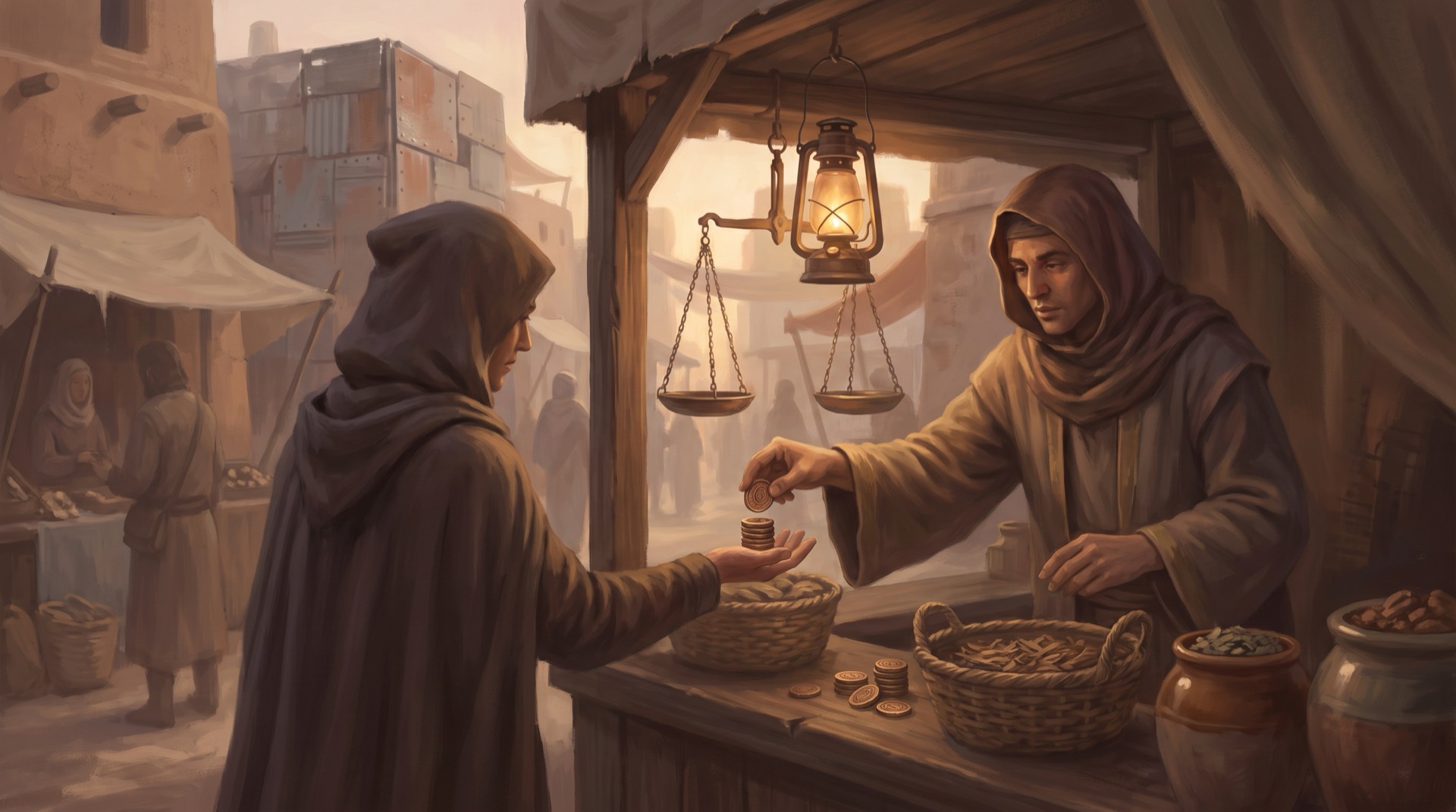
A customer at an unattended trade stall, the owner's stool empty

Trade without being online

Set up a shop and it sells while you sleep. Take a commission and deliver it next week. Nothing here needs two people awake at the same time.

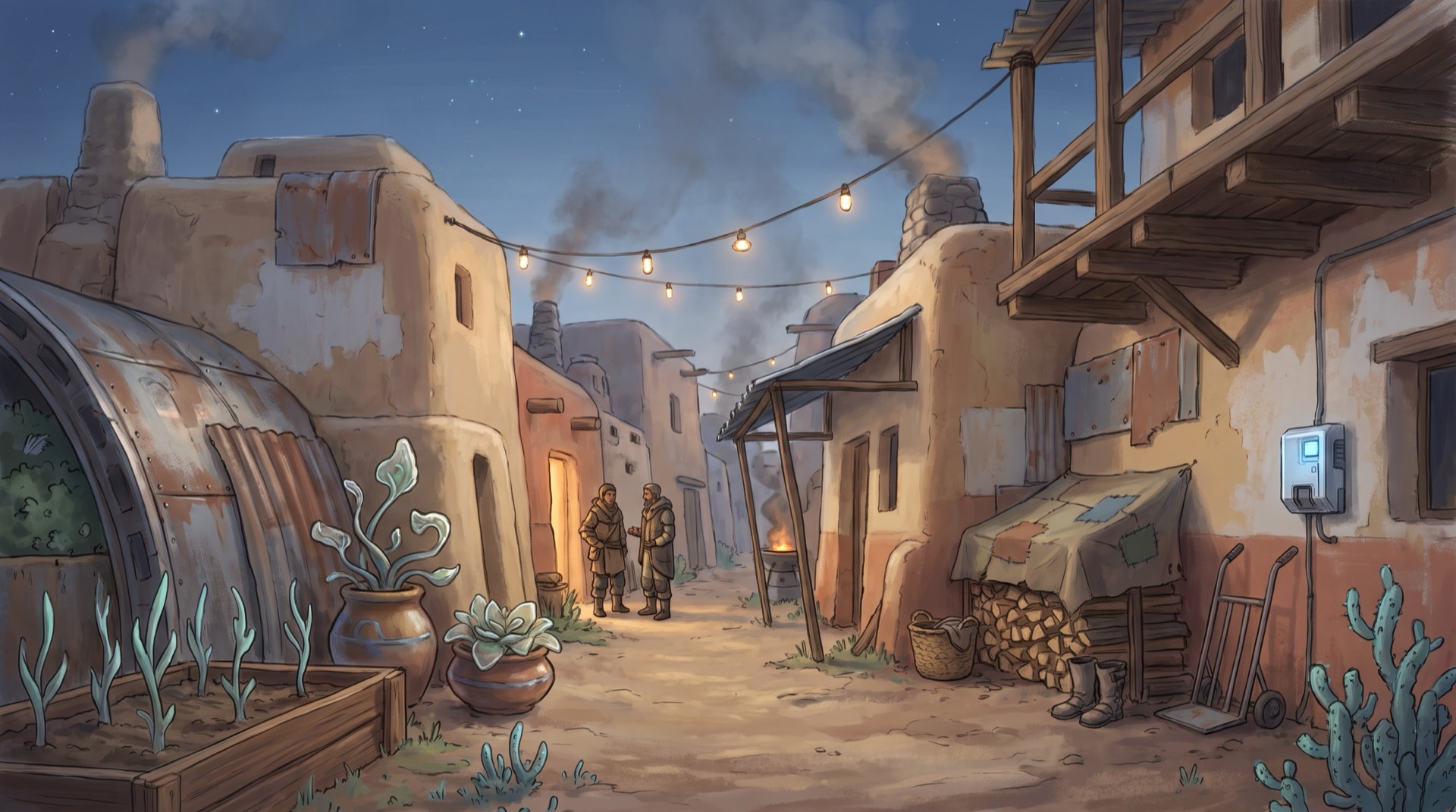
A street in a player-built settlement

Build a town that stays

Player settlements are real places on the one map. They grow, they elect people, they need upkeep — and if everyone walks away, they fall down.

Fall Season

Every few weeks,
the sky restocks.

Resources do not sit on a respawn timer waiting for you to farm them. They fall — somewhere new, all at once, in front of everybody. Debris damages buildings, but it never deletes anything, and a young settlement is safe.

On a server this small, one shared event that pulls everyone to the same place is worth more than any amount of written content.

Two or three days out

The belt shifts and the warning goes round. Nobody knows exactly where it will land.

It comes down

New material, in new places, with properties nobody has seen yet. Most of it hits empty ground.

The week after

Everyone is out there at once. Prices move, claims get argued over, and somebody gets rich.

Crafting and trade

Your name stays on it.

Every crafted item in the world carries the person who made it. On one server with a few hundred people, that is not decoration — it is how reputation exists at all.

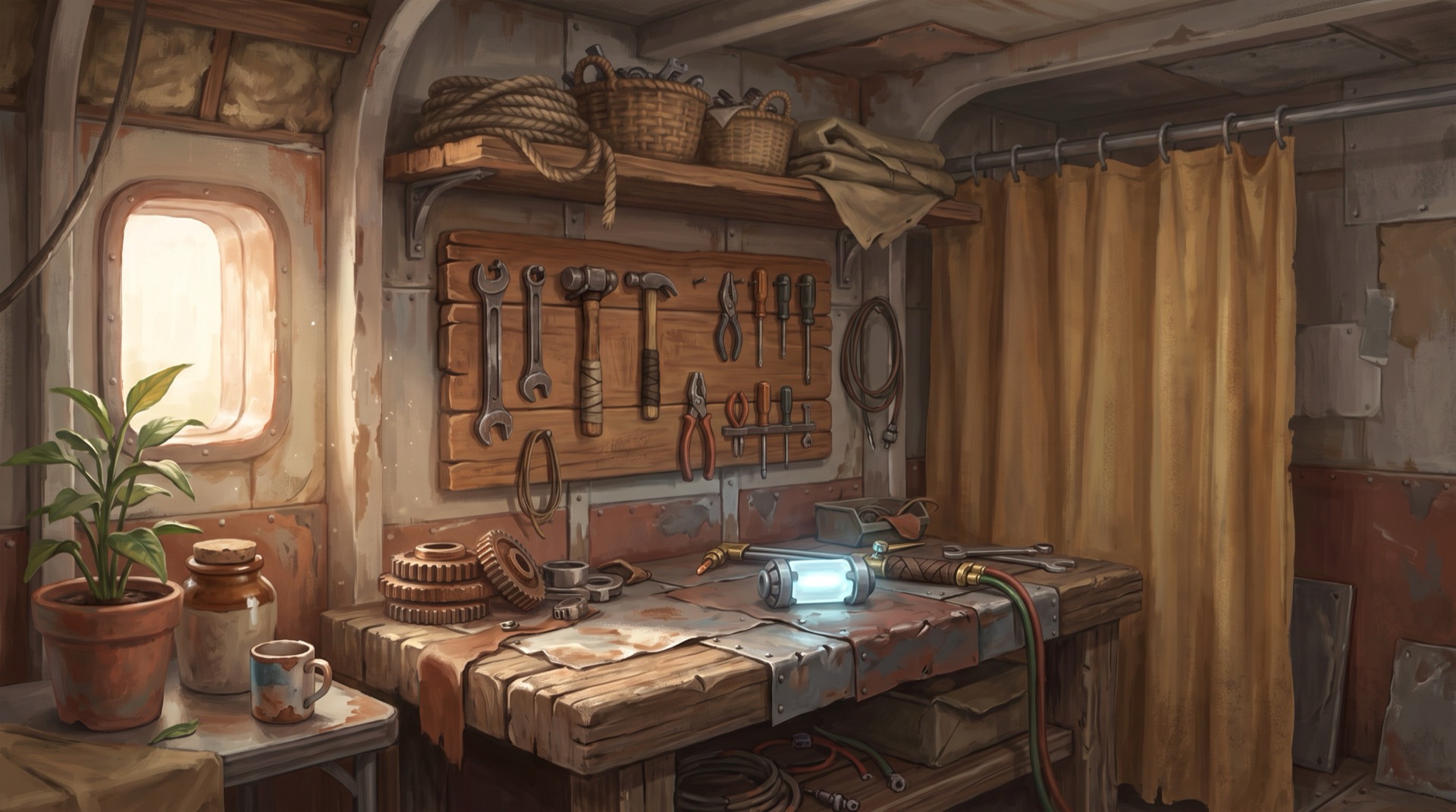
A smith working at a bench

Finished

Cutting torch

873.6

of 1185.6 possible

Made from Hull alloy — Marrow

Recovered from the Marrow, a hauler that came down in the Pans

  • Tough780
  • Heavy410
  • Clean655
  • Carries210
  • Shapes590
Signed Marek Toll
+6 +6

Real numbers from the first item ever crafted in the build. Internally the properties are called Integrity, Density, Purity, Conductivity and Malleability — on screen they are words a person can read.

Material decides the item

Five properties, rolled per batch, one to a thousand. The same alloy from a different wreck is a different good with a different price. Nothing is 'iron ore, quantity 40'.

Experimentation is where the skill is

You spend points pushing the qualities you care about, and the server rolls the result. Understanding materials well enough to beat someone of equal rank is player skill. It cannot be bought or ground.

The job runs while you are gone

Ten to fifteen minutes of real time per item, held in the database and not in your session. Start one at 23:55, close the game, and it is finished when you come back — tonight or in three weeks.

And the part most games get wrong

Gear wears out from work and hazard, not only from fighting. Cutting tools blunt, suits take contamination, vehicles need parts. Someone who never fires a shot still keeps four crafters in business — which is why the economy does not need combat to run.

Eleven roles

Nine of them never need to win a fight.

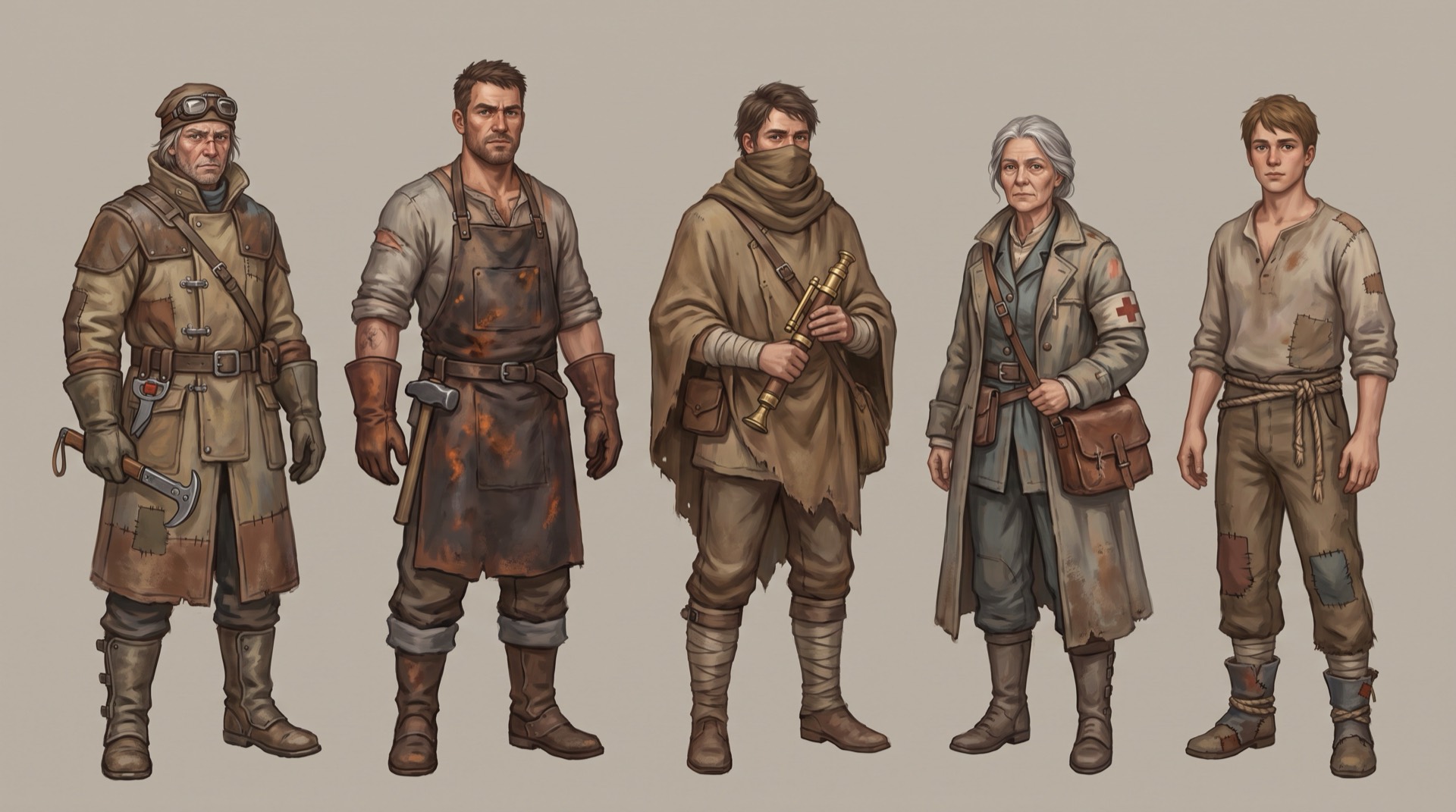
You pick one main job and one side job. The side job can never reach master, so nobody is self-sufficient and the best of anything has to come from somebody else. There are no levels — only titles, and you can hide those.

  • Salvager

    Extraction

    Break down wrecks and debris fields.

  • Prospector

    Extraction

    Ore, gas and organics. Survey it, assay it, set up the rigs.

  • Smith

    Crafting

    Weapons, tools and power cells.

  • Outfitter

    Crafting

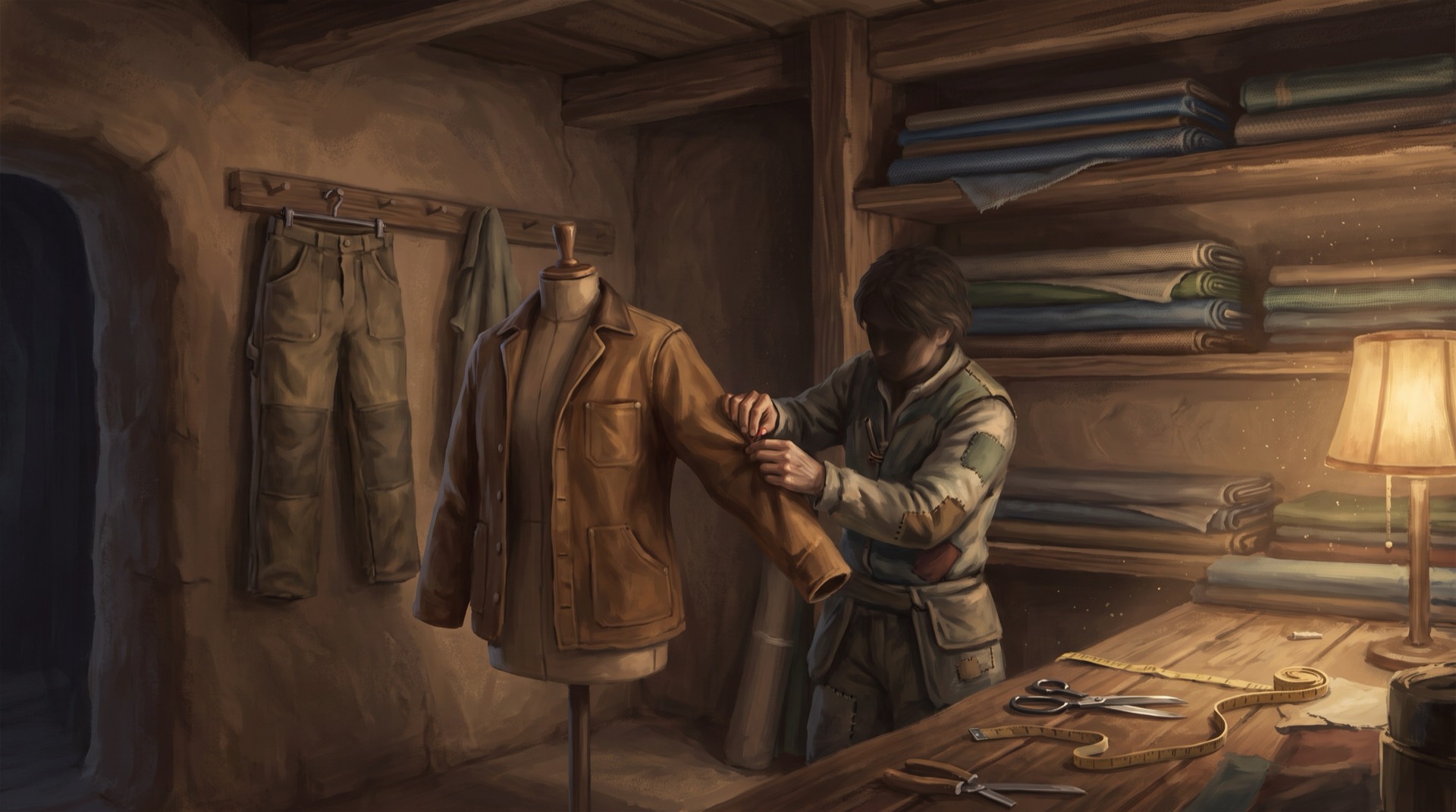
    Armour, clothing, protective suits, carry systems.

  • Machinist

    Crafting

    Vehicles, droids, machinery, generators.

  • Wright

    Crafting

    Buildings, furniture and settlement infrastructure.

  • Warden

    Field

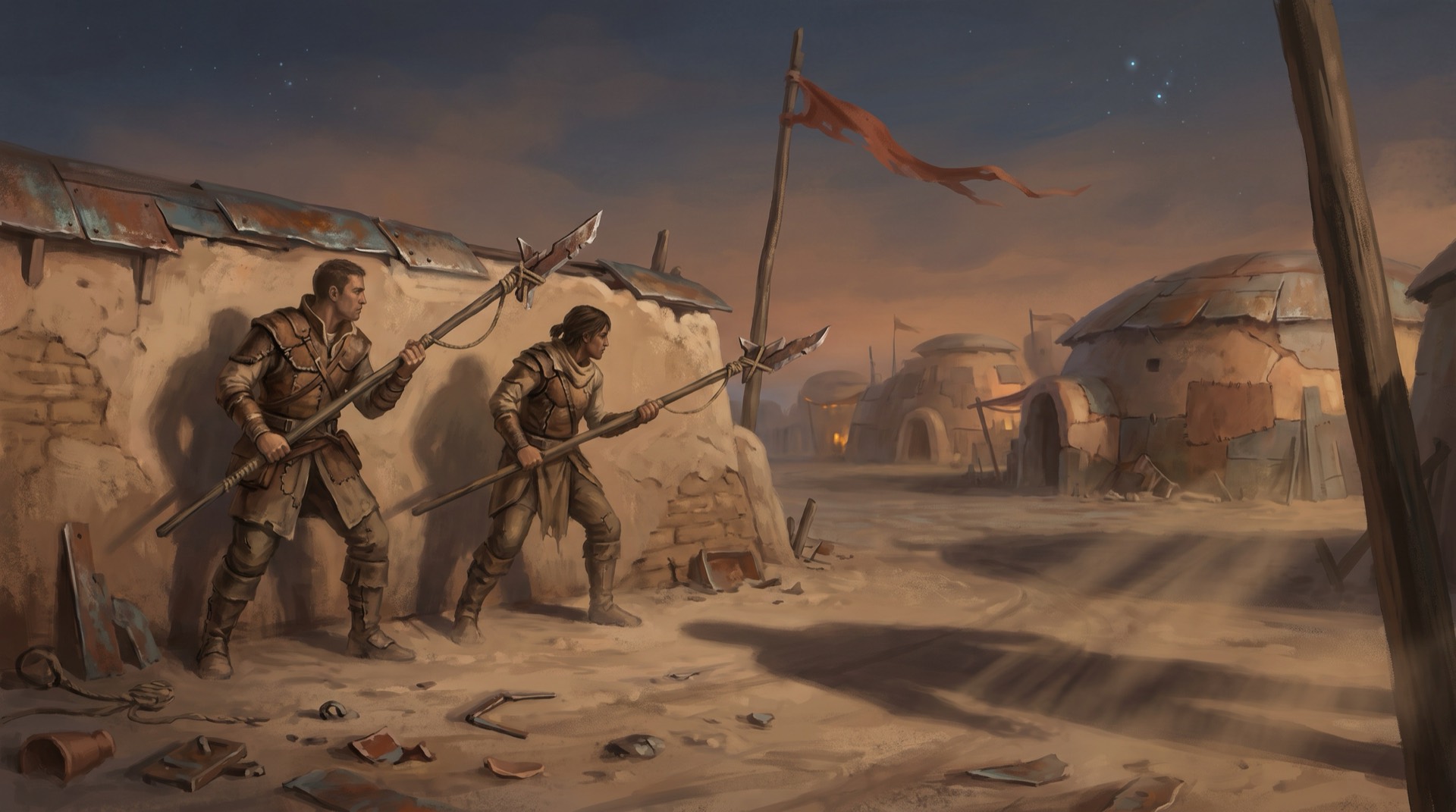
    The fighting role. Ranged and melee both.

  • Outrider

    Field

    Wilderness, animals, tracking, traps, field camps.

  • Medic

    Support

    Healing, stims, and treating Fall sickness.

  • Broker

    Support

    Trade, shops, prices, logistics, transport contracts.

  • Steward

    Social

    Lodging, food, rest and morale. The one behind the counter.

Progress comes from doing a specific thing, not from repeating any thing. “Craft five items above quality 80” is a milestone. A macro cannot meet it.

How it is built

Made for someone with two evenings a week.

Not by making it shallow. Every mechanic gets the same test before it ships: does this punish someone who plays six hours a week instead of forty? A deep sandbox that respects a limited evening is a combination almost nobody offers.

  • 01

    One world, one server

    No copies of the map, no server list, no instances. If something happens, it happens where everyone can see it — and names get known.

  • 02

    Nobody can do everything

    You pick one main job and one side job, and the side job never reaches master. The best gear only comes from other people. That is on purpose.

  • 03

    Slow means time, not repetition

    A crafting job takes real minutes while you are away. It does not take four thousand clicks. Grinding is not pacing, it is lazy design.

  • 04

    No levels at all

    No level number, no gear reset every patch. You get wider and more specialised, not bigger. A three-month-old character is not hopeless against a three-year-old one.

  • 05

    Not fighting is real play

    Nine of the eleven roles never need to win a fight. Combat exists and works, but it is not the spine of the game and it is not where progress lives.

  • 06

    Players build the world

    Towns are put up by players, run by players and elected by players. They can also fail, empty out and fall down.

  • 07

    Built for people with jobs

    Every mechanic gets one test: does this punish someone who plays six hours a week instead of forty? If it does, it is wrong and it does not ship.

Things you will not find

  • No daily rewards, no login streaks, no season pass
  • No level number and no gear reset
  • No matchmaking and no queues
  • No decay that runs while you are logged out
  • No raid nights — content is sized for two to five people
  • No pay-to-win shop
  • Time away costs you condition on your gear, never the gear
  • Trade works while both people are offline
  • Two weeks away does not put you behind anybody

Where it stands

One person is building this.

Kevin is the one-man show behind Fallow Reach, with heavy AI support at exactly the points where it speeds the work up enormously. No studio, no publisher, no funding round. That sets the pace, and it is why the scope is deliberately small on purpose: one server, one compact world, and systems built for two hundred people rather than two hundred thousand.

The dangerous part of building an MMO is the middle — saving, logging in, netcode. Nothing about it makes a good screenshot and it is where almost every hobby project quietly stops. That part is done already!

M0

The server runs and a client connects

M1

Two players move in one world and see each other

M2

Log out, restart the server, log in — you are where you were

M3

Recover salvage, come back tomorrow, it is still yours

M4

Build something from what you salvaged, with your name on it

M5

Sell something to another player while you are offline

M6

Things wear out, so repair work becomes a job

M7

Put up a building that is still standing tomorrow

M8

The first real area replaces the flat test ground

M9

A town with people in it, to come home to

M10

Ten of us on the server for a weekend — and somebody asks somebody else to make them something

M11

Enough of the game in one piece to really play it

Eleven milestones in all. The last two are a closed alpha with a handful of friends, and then the first slice of the game complete enough to play properly. No date yet — we would rather tell you when it is real than guess now.

Before the alpha

Be on the server
the first night.

A world this small only works if the first fifty people are the right ones. When the alpha gets close, there will be a mailing list here — one short note every time something worth showing gets built, and a message the day the server opens.

The sign-up opens later this year.

Not yet, on purpose. There is more game to build first, and an invitation is worth more when there is something behind it.